Design Competitions as Civic Tools: How Open Briefs Shape Urban Futures
Open design competitions do more than select a winning scheme. At their best, they reframe public conversations about what cities can be, surfacing ideas and voices that conventional procurement processes routinely exclude. The competition brief (carefully written and widely distributed) can function as a civic document, articulating aspirations that planning reports rarely capture and inviting a community of designers to respond with the full force of their imagination.
The Limits of Conventional Procurement
Most public design work proceeds through procurement processes that prioritize demonstrable experience and risk management. Requests for qualifications screen out firms that lack a portfolio of comparable completed projects. Fee schedules compress design budgets, discouraging the investment of time required for genuinely exploratory work. Phased processes extend over years, with multiple rounds of review and approval that erode the coherence of even the most robust initial concept.
These constraints are not arbitrary. Public agencies are stewards of public funds, and the accountability systems that govern procurement exist for legitimate reasons. But the cumulative effect is a built environment that tends toward the familiar. The design approaches that win public commissions are those that have already won public commissions: a circularity that makes it difficult for new thinking to gain a foothold.
What Competitions Do Differently
Design competitions disrupt this pattern in several ways. By opening the brief to a broad field of entrants (not just established firms but emerging practitioners, academic researchers, and interdisciplinary teams), competitions introduce ideas that would not otherwise reach the table. The format rewards design ambition rather than project experience, creating a different selection pressure that tends to surface more exploratory work.
Competitions also function as research instruments. Even proposals that do not place in final judging contribute to a collective body of knowledge about a site, a problem, or a design challenge. A well-structured competition can generate dozens or hundreds of distinct responses to a brief, each probing different dimensions of the problem from different disciplinary angles. This output, if it is documented, analyzed, and made publicly available, represents a genuine contribution to design knowledge that outlasts the competition itself.
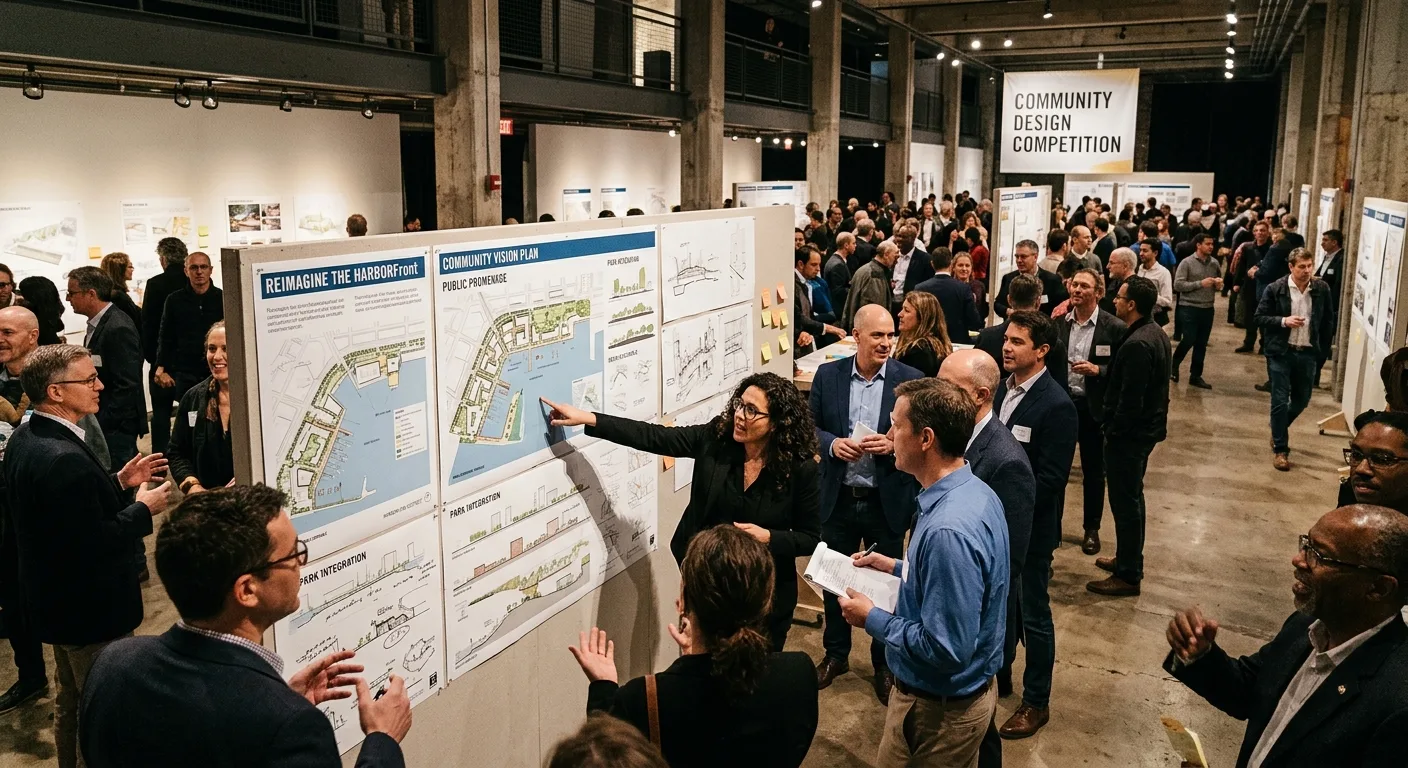
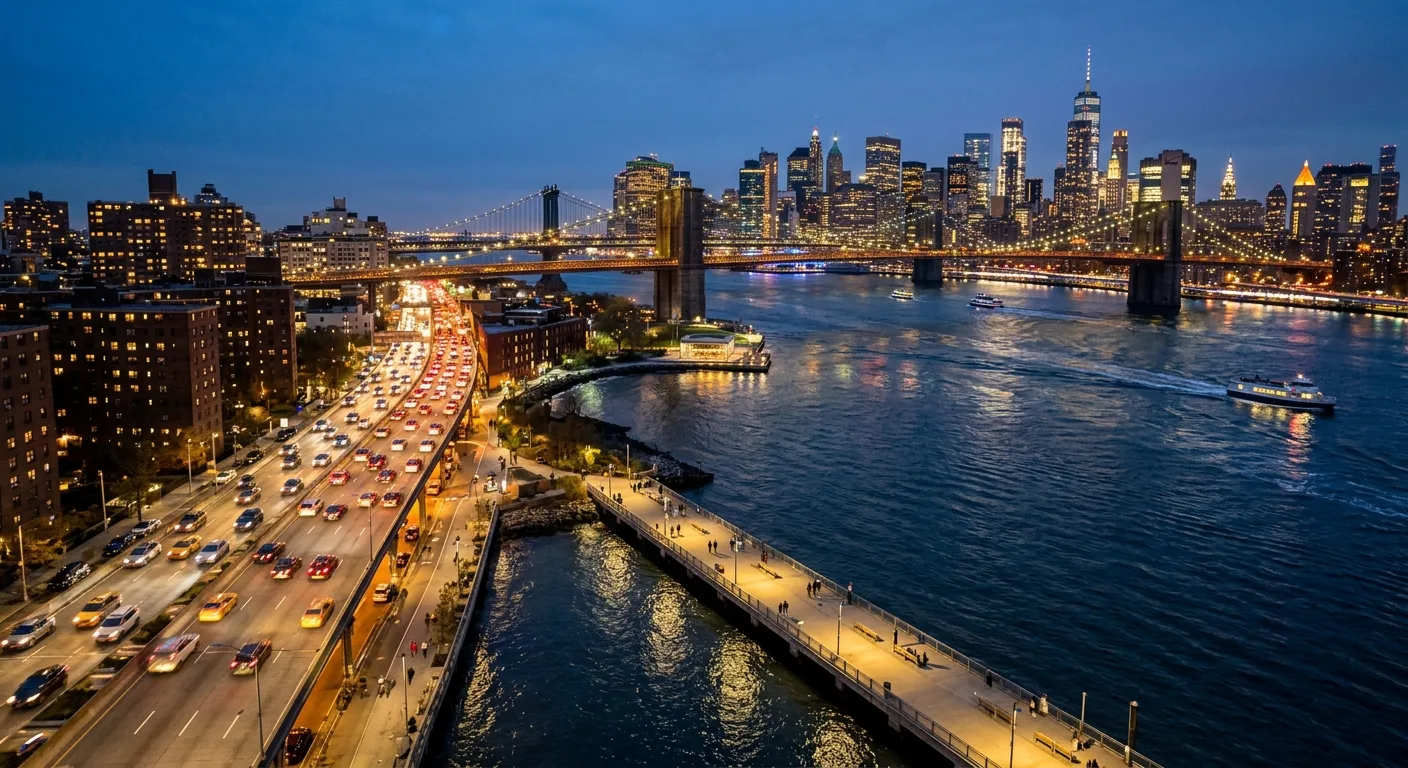
The CIVITAS competition for the East River Esplanade exemplifies this potential. By inviting proposals from architects, landscape architects, urban planners, and artists, the competition drew on multiple disciplinary traditions and produced a range of responses that no single team could have generated on its own. The resulting body of work advanced public understanding of what the esplanade could become and established a reference point for subsequent planning discussions.
Structuring a Competition for Public Value
Not all design competitions deliver on their civic potential. The format can produce spectacular renderings that bear no relationship to buildable reality, generating public excitement that dissipates when implementation proves impossible. It can privilege formal inventiveness over rigorous site analysis, rewarding dramatic gestures at the expense of workable proposals. And it can engage the design community without engaging the communities that will actually use the spaces being designed.
Structuring a competition for genuine public value requires attention to several dimensions.
The brief must be specific enough to ground proposals in reality, while open enough to admit genuine invention. A brief that specifies every program element leaves no room for designers to challenge the assumptions behind the program. A brief so open that it provides no constraints invites proposals that are visionary but unmoored. The most productive briefs occupy a middle ground: they establish the conditions of the site clearly, articulate the values and goals of the sponsoring organization honestly, and leave the design response genuinely open.
Jury composition matters significantly. A jury composed entirely of design professionals will evaluate proposals through one lens; a jury that includes community members, public agency representatives, and experts from adjacent fields will bring different priorities to bear. Diverse juries tend to produce more nuanced evaluations and to identify proposals that address the full range of public interests at stake in a project.
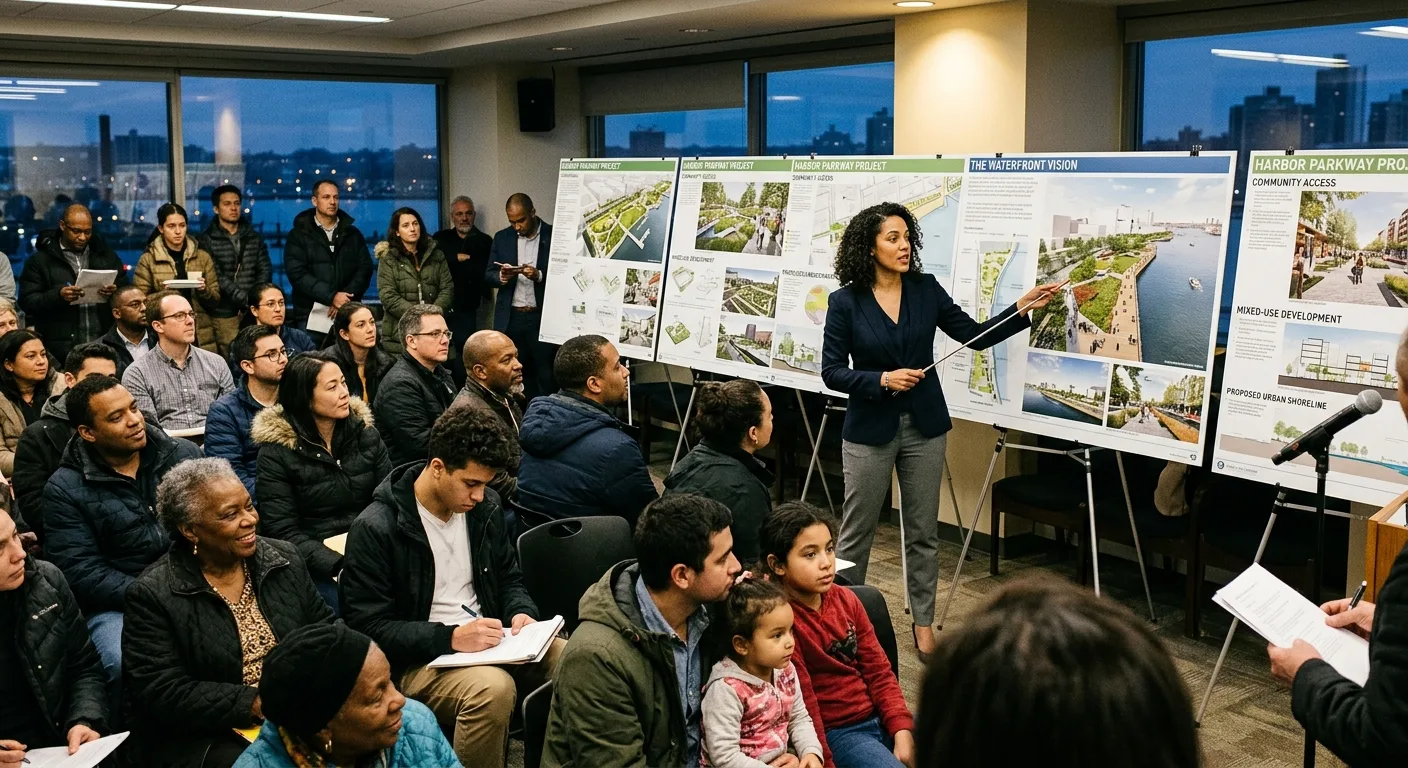
Public engagement should be integrated into the competition process, not appended to it. Holding community meetings to present competition results after the jury has decided is a form of engagement, but a shallow one. More productive approaches involve communities in framing the brief, in reviewing proposals at intermediate stages, and in evaluating finalist schemes against criteria they have helped to define.
From Competition to Construction
The distance between a competition-winning scheme and a built project is often vast. Many celebrated competition winners have never been constructed; many that have been built bear limited resemblance to the original proposal. This gap is not necessarily a failure; the value of the competition may lie primarily in the ideas it generates rather than in the specific scheme it selects. But it is worth understanding why the gap exists and how it can be bridged.
Budget is the most common constraint. Competition proposals are rarely costed with precision, and the schemes that win competitions are often those that imagine resources beyond what is actually available. Closing the gap between competition vision and construction reality requires early engagement with cost estimators and with the public agencies responsible for long-term maintenance. Design teams that treat these constraints as design inputs rather than external impositions tend to produce proposals that are both inventive and implementable.
Regulatory complexity is a related challenge. Urban waterfronts in particular are subject to overlapping jurisdictions: municipal parks departments, state environmental agencies, federal Army Corps of Engineers permitting, coastal zone management regulations, and more. A proposal that is technically compelling may face years of permitting review, during which its champions may move on and its political support may erode. Competition sponsors that work through permitting implications before launching a competition (or that provide competitors with detailed regulatory guidance) tend to produce more buildable results.
The Civic Meaning of the Design Competition
Beyond its instrumental purposes, the design competition carries a civic meaning that is worth articulating. When a nonprofit organization like CIVITAS invites the public to participate in imagining the future of a shared space, it performs an act of democratic urbanism. It asserts that the city is a collective project, that its future is open rather than predetermined, and that the ideas of designers and citizens (not just the decisions of administrators and developers) have a legitimate role in shaping the built environment.
This assertion is not trivial. In a context where development decisions are frequently driven by private capital and where community voice often arrives too late to matter, the design competition represents a different model: one in which imagination leads, and in which the public conversation about what a space should become is structured as an invitation rather than a notification.
That is the deeper purpose of competitions like the one CIVITAS organized for the East River Esplanade. The specific proposals they generate will age and be superseded. The civic habit of imagining shared space together (rigorously, ambitiously, and collectively) is the lasting contribution.