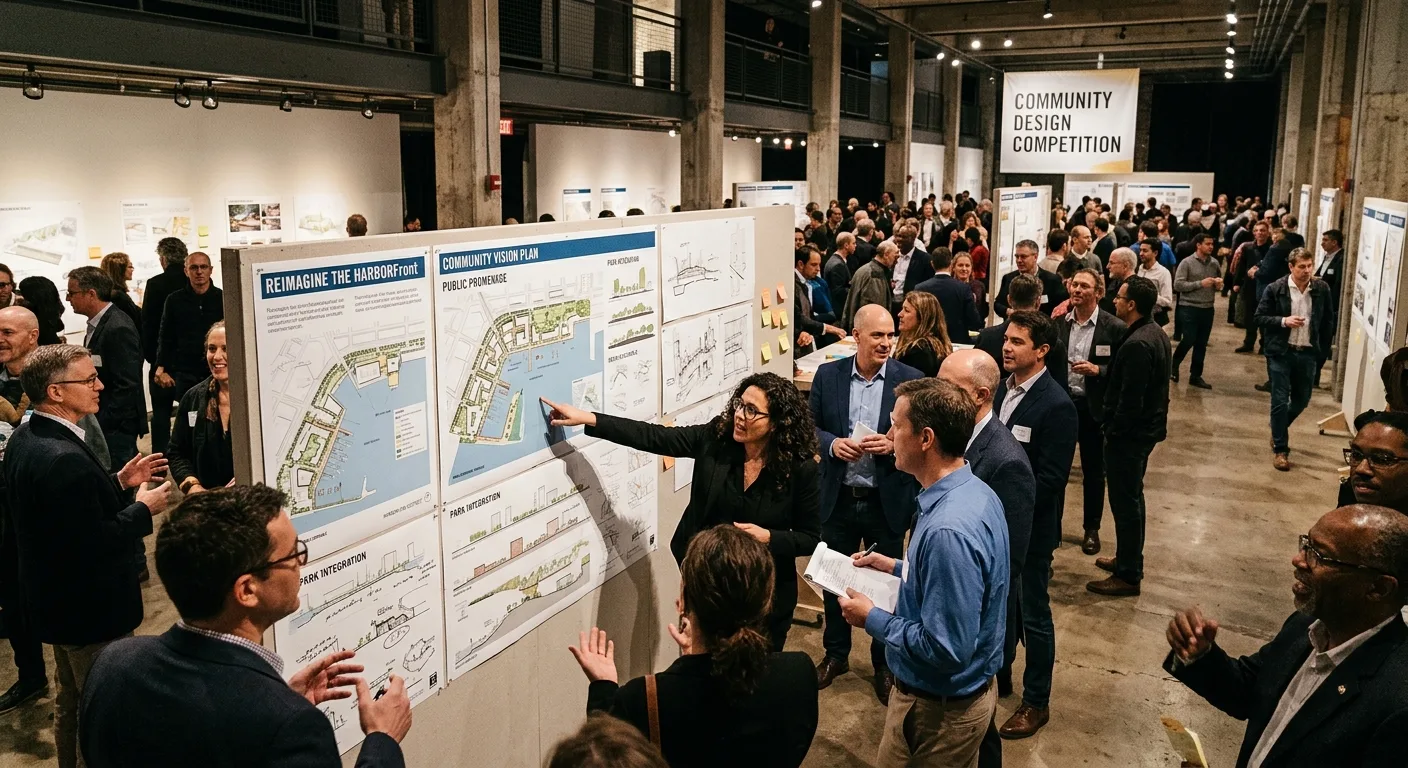
The East River Esplanade stretches along Manhattan’s eastern edge for several miles, connecting neighborhoods from the Lower East Side northward through Yorkville. It is one of the longest continuous waterfront public spaces in the borough. It is also, by many measures, one of the most underutilized: a case study in the distance between waterfront potential and waterfront reality.
A Waterfront in Name Only
For much of its history, the East River Esplanade has offered residents access to the water in theory more than in practice. The physical conditions of the esplanade (crumbling concrete, failing pier decks, inadequate lighting, and persistent maintenance backlogs) have made it an unwelcoming environment for much of the year. The adjacent Franklin D. Roosevelt Drive creates an acoustic and physical barrier between the esplanade and the residential neighborhoods it nominally serves, requiring pedestrians to navigate underpasses and elevated crossings that discourage casual use.
The esplanade’s programming has historically been thin. Long stretches offer little more than a walkway and a railing, with none of the landscape variety, seating, play facilities, or cultural amenities that animate the city’s most successful public spaces. The result is a waterfront that exists in planning documents and public statements as an asset, but that functions in practice as a residual space: used by committed runners and cyclists but largely bypassed by the residents who live within a few blocks of it.
The CIVITAS Initiative
It was against this backdrop that CIVITAS, a New York City-based nonprofit organization focused on improving the public realm, organized the “Reimagining the Waterfront” design-ideas competition. The competition invited architects, landscape architects, urban planners, and artists to submit proposals for the revitalization of the East River Esplanade, not as a master plan constrained by immediate feasibility, but as a genuine exploration of what this linear public space could become.
The competition brief asked participants to engage with the esplanade’s specific conditions: its industrial heritage, its relationship to FDR Drive, its exposure to the river and to the weather, and its role within a park system that serves some of the densest residential neighborhoods in the United States. Proposals were evaluated on the quality of design thinking, the seriousness of engagement with site conditions, and the vision they offered for a transformed public edge.
What the Competition Revealed
The submissions to the CIVITAS competition illuminated both the complexity of the site and the breadth of design approaches that a well-framed brief can elicit. Several recurring themes emerged across the proposals.
First, the relationship to FDR Drive was a persistent preoccupation. Many designers proposed strategies for mitigating the highway’s impact: through land bridging, noise buffering, creative programming in the underpass zones, or more speculative structural interventions that reimagined the highway corridor itself. These proposals varied widely in scale and realism, but they shared a recognition that the esplanade cannot be revitalized in isolation from the infrastructure that separates it from the rest of the city.
Second, many proposals emphasized ecological activation. Rather than maintaining the hard-edge character of the existing esplanade, designers imagined vegetated margins, floating wetlands, and intertidal habitats that would soften the transition between land and water. These proposals drew on evolving best practices in living shoreline design and reflected growing awareness of the ecological potential of urban waterfronts.
Third, public art and landscape sculpture featured prominently. The esplanade’s linear form (long, narrow, and relatively uniform) presents a challenge for conventional park design. Several designers proposed landmark installations at key nodes along the route, creating destinations that would draw users from surrounding neighborhoods and establish a distinctive character for the waterfront as a whole.
Lessons for Urban Waterfront Planning
The East River Esplanade case offers several lessons that extend beyond the specific site.
The first is that physical improvement alone is insufficient. The esplanade’s problems are not purely a matter of deteriorated infrastructure, although that deterioration is real and significant. They also reflect governance failures: the fragmented jurisdictional landscape that makes sustained maintenance difficult, the absence of a clear institutional champion with both the authority and the resources to manage the space effectively. Design competitions can generate compelling visions, but those visions require governance frameworks capable of translating them into durable public spaces.
The second lesson concerns the relationship between design quality and use. The esplanade’s low utilization is not simply a function of poor physical conditions; it also reflects the absence of programming and landscape variety that draw people to a space and keep them there. Investment in high-quality design (in planting, in seating, in lighting, in the texture and detail of surfaces and structures) is not a luxury. It is the mechanism through which a public space earns its place in the daily life of a neighborhood.
The third lesson is about community engagement. The CIVITAS competition engaged the design community in a conversation about the esplanade’s future, but the communities that live adjacent to the esplanade must be central participants in any genuine revitalization effort. Their knowledge of the site (its actual patterns of use, its barriers to access, its social dynamics) is irreplaceable, and their ownership of the planning process is a prerequisite for long-term success.
The Esplanade as Urban Spine
Seen in a larger context, the East River Esplanade represents something more than a local parks project. It is a potential urban spine: a continuous public corridor that could connect neighborhoods, support ecological infrastructure, provide resilience against coastal flooding, and offer residents across a broad swath of Manhattan a distinctive waterfront experience.
Achieving that potential requires sustained commitment across planning cycles and administrations. It requires capital investment in infrastructure, maintenance funding, and programming resources. It requires coordination among multiple city agencies and with state and federal authorities that have jurisdiction over different segments of the waterfront. And it requires design thinking of genuine ambition (the kind that competitions like CIVITAS’s are well positioned to cultivate).
The work of reimagining the East River Esplanade is not finished. It may, in the most meaningful sense, never be finished, because public spaces are living things, subject to changing needs and evolving conditions. But the conversations that design initiatives like this one have opened are a necessary first step.